Democratic Primary
Bread and Roses Socialism:
Decency and Renaissance
Advancing an Alternative American Dream
I’m running for Governor of Maryland to play a leadership role in a cultural revolution – as we rethink the basics of work, time, money, meaning, and identity; as we try to find a way of living in harmony with each other and the planet, at peace, with justice, in a decent society, with lives of beauty and work of passionate intensity.
I don’t have all the answers, but I do bring a fleshed out vision of where we need to go, and new policy ideas to get us there. I call it Bread and Roses Socialism. It brings together simpler living, beauty, and equality. Most centrally it offers new ways of understanding work, education, and the purpose of an economy. It’s an outlook that emerged from my book, Graceful Simplicity: The Philosophy and Politics of the Alternative American Dream.
What Do We Want?
- A less competitive society, with much less disparity between those at the top and those at the bottom.
- Less economic anxiety from early childhood through old age. Much more basic economic security.
- A steady reduction in necessary labor time. Expanding time outside the job system.
- Introducing, and then progressively expanding, the realm of passion-work in the lives of all.
- Simpler lives, with less stuff, more quality, less quantity, and more time for friendship, community, and environmental stewardship.
- More meaning, living our values, both at work and throughout life.
- More beauty in our lives, both natural and human-made — from art and dance to murals and flowering fruit trees in the inner-city.
- Education for its own sake and for critical thinking to solve pressing problems — more history, arts, and humanities.
- Real global citizenship — taking the lead in protecting the planet and protecting the weak.
Most ambitiously, we seek a new culture, one in which personal identity and social status will have little to do with how one earns one’s money and the amount of it. We seek a culture in which identity and status will revolve around one’s passion-work, one’s values, character, and excellences.
We seek to usher in a new vision of a developed society, and a new definition of progress, a culture that does not constantly aspire to more, one in which we live with a lighter footprint, yet at higher quality, one of human renaissance, one of frugal living within material limits, with an ever growing abundance of time that is truly one’s own.
Policies
- Guaranteed Basic Employment: A legal guarantee of at least 32 hours/week of paid employment (see button below).
- Transition To the Four-Day Work Week via a time liberty law allowing workers to opt for four days, after three years on the job.
- Building the Simpler Living Option by living wage policies to reduce the cost of meeting core economic needs — thus making the 4-day work week viable for all.
This LIving Wage Policy Matrix , includes a right to a one-time Zero-Interest Mortgage for modest or tiny new homes, and Free education pre-k through college, Reducing automobile dependency by free public transit and the “Near-Free EV” as well as highly subsidized alternatives to the car.
- Tax transformation that includes tax-elimination for the bottom third of households and more progressive taxation among the top 1/3, including progressive property taxes.
- Schooling having less to do with the job market, with more focus on history, the arts, the humanities, and civics. With the love of books and the ability to contribute to the lives of others and to the beauty of the world as the hallmarks of successful education.
NOTE to Viewer:
The site is a work in progress. New issues papers will be added as they are finalized.
Email: Jsegal@BreadandRoses.US
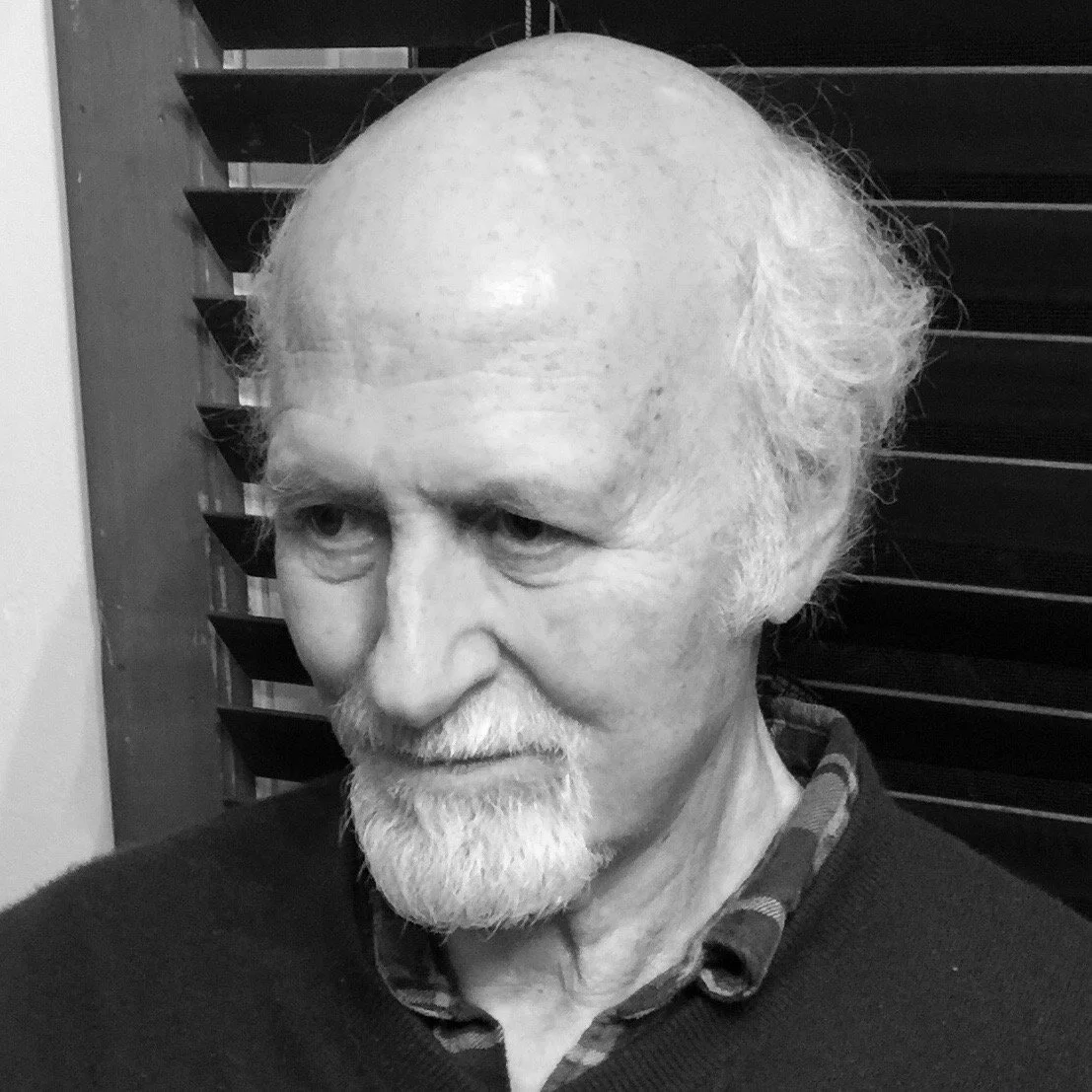
Who is Jerome Segal?
I grew up in the Bronx. My father was an immigrant; my mother, first generation. In Poland my father lived a vibrant life, coming from a distinguished Rabbinic family and as an elected socialist in his twenties. In the U.S., when I grew up, he worked 60 hrs/week to support his family as a garment worker in a Brooklyn shop.
So the issues of work, time, money and meaning were central to my consciousness even as a child. As an undergraduate at The City College of New York, this deepened intellectually when I did an economics honors thesis on John Kenneth Galbraith’s The Affluent Society, a book that remains relevant to my ideas in this campaign.
I’m now 78 years old, from Bernie Sanders’ generation. Like Bernie, I was animated by the anti-war and social justice struggles of the 1960’s. For the last 57 years, in multiple venues, in multiple roles, I’ve been pursuing social, political and cultural transformation.
1. As an Author/Philosopher/Research Scholar
I’m the author of seven books, ranging from philosophical psychology to the Bible. I’ve written extensively on solutions to the Israeli Palestinian conflict. My book “Graceful Simplicity: The Philosophy and Politics of Simple Living” gave rise to Bread and Roses Socialism. It has two main themes. First that beauty and creative expression should be thought of as basic human needs and as necessary parts of the simple life – (Bread AND Roses). And secondly, that living simply is more than a lifestyle choice. It is an element of a reconceived American Dream in which we recapture our time. Opening a Simple Living Option for all Americans, should be at the center of social and economic policymaking.
When I finished graduate school, for several years I taught philosophy at the University of Pennsylvania, including Philosophy of Education. As a teacher, I wrestled in the classroom with a fundamental educational dilemma understood as of great importance in the ‘60’s– how to have authentic education in a society in which schooling, schooling success, and even school attending, is centrally motivated by the quest for success in a zero-sum competition for “good jobs” after graduation.
After four years at Penn, seeking a career with more engagement in the world of policy, I went back to school, got a Master’s in Public Affairs and moved to Washington to work for Congress, and subsequently, the Executive Branch. After fourteen years in government, I united my two worlds, joining the Institute for Philosophy and Public Policy at the U of Maryland School of Public Policy for two decades.
2. My Work in the Legislative and Executive Branches
Congressional Aide
I worked for Congressman Don Fraser of Minneapolis. My first months were spent at the US Mission to the United Nations where Fraser was serving as a member of the US Delegation. I worked closely with civil right activist Clarence Mitchell, also a member of the Mission, assisting Mitchell in his challenge to South African Prime Minister Vorster on the issue of apartheid. Nelson Mandela was still in prison at the time.
Returning to Washington I had a broad portfolio including nuclear energy and proliferation, economic policy, and quality of worklife issues.
Administrator
House Budget Committee Task Force on Distributive Impacts of Budget and Economic Policies
Fraser subsequently appointed me to the staff of the House Budget Committee where I served as the Administrator of a unique task force we created under his Chairmanship. Our mandate was to examine the equity dimension with respect to proposed new legislation, to hold hearings, prepare reports, bring in experts and the press.
One of our key projects were hearings on the distribution of wealth in the United State – an issue largely ignored by Congress in those years. A second focus was on the disparities in unemployment rates among gender, age and racial groups. We were successful in mandating annual reporting on this by the President.
In the Executive Branch
Civil Servant/Deep State Warrior - When I left the Hill, I went into the U.S. Agency for International Development. Coming from Congress, the big lesson for me was that government isn’t changed just by passing laws. My role at AID was to press for the implementation of the New Directions Legislation (NDL). The NDL was a comprehensive re-write of the law governing our development assistance program. It was among the most progressive policies ever enacted by Congress, calling for our foreign assistance programs to be focused on the basic needs of the poor majority within the countries we were assisting. It called for the participation of the poor in the process, and came to include a women in development component.
As Coordinator for the Middle East
I was in the Central Policy Bureau, the person responsible for monitoring adherence to the NDL in our assistance programs in the Middle East. It became clear the implementing the New Directions meant that a struggle had to be waged over every individual project design and over AID strategy for each country. I participated in hundreds of project reviews (in areas of health, education, agriculture, population, policy design) , and dozens of Country Development Strategies, analyzing project design and development strategy and fighting the good fight.
During the Reagan Administration, I came into regular conflict with new political appointees over these issues. This continued until John Bolton, who had taken over the Policy Bureau, removed me from my position. As a civil servant (GS-15) I couldn’t be fired. Instead I was given a grand title: Senior Advisor for Agency Planning, but little authority, though I was made the primary drafter of the Agency’s development strategy document, in which I was able to maintain adherence to the basic needs orientation, even in the Reagan Administration. Gradually, I transitioned back to a university setting, leaving the Agency in 1988.
3. Founder: The Jewish Peace Lobby
In 1989, I founded The Jewish Peace Lobby, the second lobby in Washington to emerge from the American Jewish Community, and which focused on the Israeli-Palestinian Conflict.
The mere fact of our existence broke the myth that when AIPAC spoke to Congress or the Executive Branch that it represented THE Jewish community.
Over the years, JPL had a rich and varied experience, some accomplishments with Congress such as the conceptualization and initiation of a program of US support for grassroots cooperative Palestinian-Israeli projects. This PIC fund (Palestinian-Israeli Cooperation) which we fathered, gained support both from the George W.H. Bush Administration and House and Senate Committees. Over the years it has grown to be an establish part of US peacemaking efforts, today functioning at a $10 million/year level.
JPL grew to 5,000 members nationwide, with some 30 chapters around the country. We gave testimony before Congressional committees and the Democratic National Committee, organized ground breaking public statements by Rabbis (one in particular of 300 rabbis who called for sharing Jerusalem with a Palestinian State was reported in the New York Times).
Gradually, our work shifted away from Congress and grassroots lobbying. We hired staff in Jerusalem, engaged directly with top Israeli and Palestinian leaders (e..g. Shimon Peres, Ehud Olmert, Arafat, Mahmoud Abbas) and with the key people in the State Department and the White House who were actually making policy.
In 2008 J-street emerged as a new Jewish voice on Capitol Hill, coming 19 years after our pioneering work. In 2010, there were extensive talks about merging JPL and J-Street, but in the end, we went our separate ways. JPL essentially ended its work with the Congress and intensified its work with the Executive Branch, the Israeli government, the PLO/Palestinian Authority and even Hamas. Indeed, we made initial contact with Hamas in 2006, and I carried a letter, something of a peace overture, from Hamas leader and Prime Minister of the Palestinian Authority, Ismail Haniyeh to President Bush. It was ignored, unfortunately.
Institutionally, the Peace Lobby was replaced by a new organization we established called “The Peace Consultancy.” To our work in Washington Jerusalem and Ramallah, we added intense activity at the United Nations, where we engage on a regular basic. This work is on-going, and we have come to see the UN General Assembly as potentially a major actor in a revitalized Post-Oslo peace process.
In this regard, The Peace Consultancy is pursuing the “Solana-Ben Ami” UNSCOP-2 initiative, named for 2 of its 4 authors, Javier Solana, the European Union’s Senior Diplomat from 1999-2009 and former Israeli Foreign Minister, Shlomo Ben Ami. The other two authors were Nobel Prize winner Thomas C, Schelling and myself. It appeared in the New York Times in 2012, and in an updated form in Arabic, in the Palestinian newspaper, al-Quds, in February 2022.
4. Conflict Resolution Strategist
In 1982, working with Marc Raskin (father of Congressman Jamie Raskin) I organized the first Jewish protest at the Israeli Embassy over Israel’s invasion of Lebanon.
Over the years I came to focus on strategies to end the conflict by making justice a central aspect of peace making. Concretely this has been a commitment to the establishment of a Palestinian state that would live alongside Israel, and to new ways to address the rights and claims of the Palestinian refugees.
Highlights include:
May 1987 – Traveled to Tunis as part of first delegation of American Jews to open dialogue with the PLO.
April 1988 – Published in Arabic in largest Palestinian paper (al Quds) an essay proposing a new peace strategy for the Palestinians, centering on a unilateral Declaration of Independence.
August 1988 - Brought back from Tunis a PLO letter to US Secretary of State Shultz in which the PLO committed to making major steps towards meeting the US demand that it recognize Israel’s right to exist and renounce terrorism.
Nov. 1988 – The PLO adopts aspects of my strategy calling for a Palestinian Declaration of Independence grounded on Palestinian acceptance of the 1947 UN Partition Resolution, which was also the basis for Israel’s Declaration of Independence, and which called for two democratic states, one Arab and one Jewish.
1989 - Publication of my book, “Creating the Palestinian State – a Strategy for Peace”
1989- Established The Jewish Peace Lobby to promote changes in US policy, as an alternative to AIPAC – JPL was a precursor to J-street, which emerged 18 years later.
1995 – Meetings with Shimon Peres and Yasser Arafat to propose replacing the PLO with State of Palestine which would have immediate sovereignty over Gaza, and administer the West Bank pending negotiation of the final status issues.
2000 – Publication of “Negotiating Jerusalem” which showed that there were solutions to Jerusalem issue that could be supported by Israeli and Palestinian public opinion. At White House request, prepared briefing material on Jerusalem used by President Clinton at the Camp David negotiations.
2006 – Dialogue with Hamas over their willingness to accept a peace with Israel if an agreement was approved in a referendum of the Palestinian people.
2012 – Authored with former Israeli Foreign Minister Shlomo Ben-Ami a plan for a new peace process focused on the two peoples, with referenda on a UN -drafted peace plan (UNSCOP-2)
2014 – Led back-channel Israel/Palestinian meetings that included a former Deputy Prime Minister of Israel and a former National Security Advisor to Netanyahu – focus was on new ideas I had developed for dealing with the refugee issue and with Palestinian recognition of Israel as a Jewish state.
2019 – Meeting with Iranian Foreign Minister Zarif to propose an Iranian Peace Initiative that would conditionally offer Israel a reset in relations were Israel to conclude a peace agreement with the Palestinians that was approved in a Palestinian referendum including the refugees.
May 2022 – Release of my new book, “The Olive Branch From Palestine: The Palestinian Declaration of Independence and the Path Out of the Current Impasse,” which explores how it is still possible to resolve the conflict and which puts forward a new approach to the refugee issue,and makes the UN General Assembly the key institutional player, as it was in 1947.
Ongoing
– Director of The International Peace Consultancy, a non-profit which develops “out of the box” strategy ideas and engages with decision makers internationally.
- I continue to write regularly for the Palestinian newspaper Al Quds, the only conflict resolution expert to do so, and certainly the only Jewish one.
5. Candidate
- In 2018, in the Maryland Democratic Primary, I challenged Senator Ben Cardin for the nomination. My challenge was initially motivated by Cardin’s opposition to Obama’s nuclear deal with Iran, by Cardin’s emergence as a resolute supporter of the Netanyahu government and his role as AIPAC’s key man in the Senate. Cardin had also proposed the criminalization of boycotting Israel — an issue reflected in Governor Hogan’s Executive order on boycotting Israel — an issue in this campaign. This was the first time in American political history that a sitting Senator faced a primary challenge because of his fealty to the Israeli government and AIPAC.
As the campaign progressed, I put forward a Bread and Roses agenda, rooted in my book Graceful Simplicity.
Unfortunately the anti-Cardin vote was split among seven challengers. I came in second of the seven, behind Chelsea Manning, the only one with wide name recognition. I received over 20,000 votes.
Following the election, I established the Bread and Roses Party of Maryland, and in 2020 was its Presidential Candidate.
In the absence of rank-choice voting, and with major changes on the national scene, this third-party effort couldn’t achieve its potential. The Pandemic, however, has made clear that millions of Americans are re-thinking the basics of Time, Work, Money and Meaning, but no social vision has emerged. Now is the time to build a new movement of cultural transformation.
I have thus decided to return to the Democratic Party and have entered this primary running as an advocate of “Bread and Roses Socialism.”